Disclaimer: Information in this article is for educational purposes only. It is not intended to replace professional medical, legal, or tax advice. HSA and FSA eligibility rules can vary by employer plan and administrator. Please check with your benefits administrator, current IRS guidelines, or a tax professional to confirm covered expenses.
Have you ever wondered, “What can I use my HSA or FSA for?” You might be surprised by just how many everyday health expenses these accounts can cover.
While Health Savings Accounts (HSAs) and Flexible Spending Accounts (FSAs) are commonly associated with doctor's visits, prescriptions, and medical procedures, their benefits go far beyond traditional healthcare expenses.

The best part? Using your HSA or FSA funds for eligible expenses allows you to make the most of your tax-advantaged healthcare dollars while prioritizing your health and wellness.
Whether you're stocking your medicine cabinet, preparing for life's unexpected moments, or taking a proactive approach to your breast health, understanding what's eligible can help you get more value from your healthcare benefits.
FSA vs. HSA: What’s the Difference?
At first glance, FSAs and HSAs seem similar. Both allow you to use pre-tax dollars for eligible healthcare expenses. However, there are important differences that can affect when and how you spend your money.
Let's take a look at the main differences: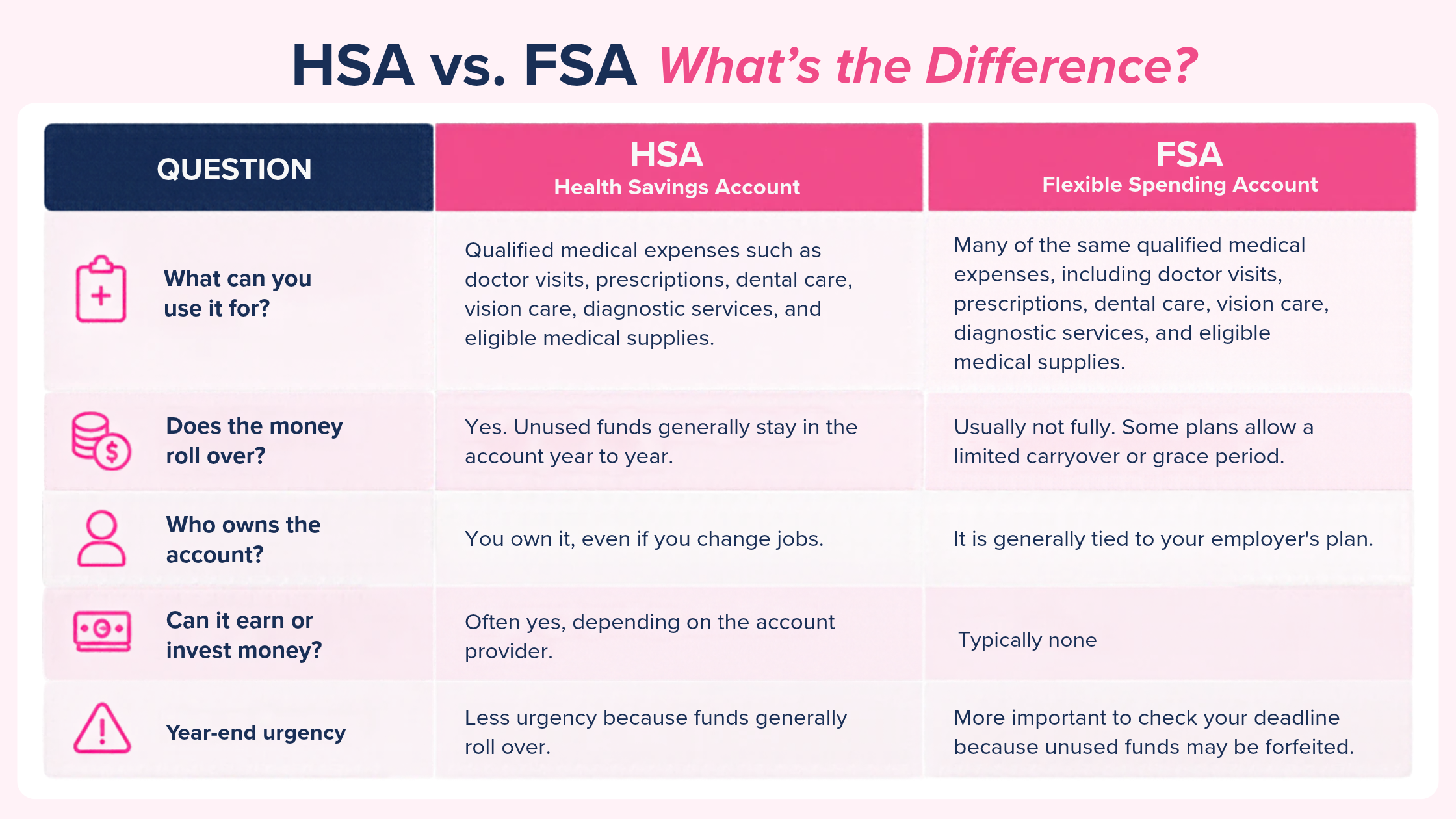
- Flexible Spending Accounts (FSAs): FSAs are employer-sponsored accounts that help individuals pay for eligible healthcare expenses and often come with spending deadlines. It's important to verify the type of FSA you have. Some types, such as Limited Purpose FSAs, generally cover only dental and vision expenses. Depending on the type of FSA offered by your employer, any remaining balance may need to be used by the end of the plan year. This is often referred to as the "use it or lose it" rule. If your plan does not offer an applicable carryover or grace period, you could forfeit unused funds.
- Health Savings Accounts (HSAs): HSAs are generally available to eligible individuals enrolled in qualifying High-Deductible Health Plans (HDHPs). Unlike FSAs, HSA funds roll over from year to year and can accumulate over time. This allows you to save and pay for eligible healthcare expenses when you need them.
Your Benefits May Cover More Than Just You
One of the biggest benefits of having an HSA or FSA is that your healthcare dollars may go further than you think, helping you care for your entire family.
Many people don't realize that HSA and FSA funds can also be used to cover eligible healthcare expenses for their spouses and qualifying dependents. From your child's next dental appointment to your spouse's new glasses, these accounts can make managing your family's healthcare expenses a little easier.
What Can You Use Your HSA or FSA For?
Wondering what qualifies as an HSA- or FSA-eligible expense? You might be surprised by how many everyday healthcare needs are covered.
Here are a few ways you can put your benefits to work for your family:
- Eye care for your spouse: Help cover the cost of eye exams, prescription glasses, and contact lenses.
- Braces for your children: Use eligible funds toward orthodontic treatments to support your child's dental health.
- Prescription medications: Pay for eligible prescriptions for yourself, your spouse, and qualifying dependents.
- First-aid essentials: Stock up on bandages, first-aid kits, and other supplies to keep your family prepared.
- Over-the-counter medications: Purchase eligible cold and flu medications, pain relievers, and other everyday healthcare essentials without a prescription.
These are just a few examples of how your HSA or FSA can help you take care of the people who matter most.
Don't let valuable healthcare benefits go unused. Take a moment to review your family's upcoming healthcare needs, check your remaining account balance, and explore which expenses qualify. Whether you're planning routine appointments or prioritizing preventive care, making the most of your benefits can help you invest in your family's health.
Keep in mind that eligibility depends on IRS guidelines and your specific plan. FSA funds may have a use-it-or-lose-it deadline, while HSA funds generally roll over from year to year.
Women’s Health Expenses You May Not Realize Can Qualify
Many women are surprised to learn that eligible HSA and FSA expenses can include a variety of products and services, from preventive breast cancer screenings to fertility tracking tools.
So, what can you use an HSA for? Let's take a closer look at what may qualify.
The following examples provide general guidance based on IRS rules. Eligibility may depend on the specific product or service, the purpose of the expense, and your plan's requirements.
The Reproductive Years
Menstrual Under the CARES Act, qualifying menstrual care products are recognized as eligible medical expenses.
But there are many more items that may be eligible, such as:
- Pregnancy tests
- Contraceptives
- Fertility monitors
- Ovulation predictors
Pregnancy and Postpartum Support
The costs associated with pregnancy can add up quickly. Fortunately, many pregnancy- and postpartum-related expenses may qualify, including:
- Pregnancy tests
- Breast pumps
- Childbirth education classes
- Breastfeeding education services
- Lactation and breastfeeding supplies
- Compression stockings (if medically necessary)
Preventive Care
Preventive healthcare is often one of the best ways to use HSA and FSA funds. Eligible expenses may include products and services like:
- Acupuncture
- Chiropractic services
- Diagnostic testing
- Blood pressure monitors
- Mental health therapy or counseling
- Some smoking-cessation products
- Vaccines and preventive services
- Breast health services and screenings
- Diabetes glucose monitors and testing supplies
- At-home cholesterol testing supplies
Women looking to take a proactive approach to their breast health may consider breast ultrasound screening services such as HerScan.
Everyday Health Purchases You May Already Be Making
You may already be purchasing some of these products out of pocket without realizing they could qualify as eligible HSA or FSA expenses. Examples include:
- Allergy medications
- Acne treatments
- Reading glasses
- Cold and flu medications
- First-aid supplies and bandages
- Over-the-counter pain relievers
- Prescription glasses and contact lenses
- Sunscreen (must meet eligibility requirements)
These don't have to be large purchases, but they can add up throughout the year. Using FSA or HSA funds is a great way to maximize your healthcare benefits by paying for eligible products and services you already use.
Before you shop, always double-check with your plan documents or administrator. Eligibility and reimbursement rules can vary depending on your plan.
Your Favorite Stores May Already Have FSA/HSA Sections
Did you know you can shop for HSA- and FSA-eligible products at some of your favorite stores? You don't have to visit a medical supply store or pharmacy to put your healthcare benefits to good use.
Major retailers like Amazon, Target, Walmart, Walgreens, CVS, and Ulta Beauty make it easier than ever to shop for qualifying health and wellness essentials, both online and in stores.
From sunscreen and skincare products to first-aid supplies, pain relievers, and feminine care essentials, you may be surprised by how many everyday items qualify.
Even better, many retailers take the guesswork out of shopping by clearly labeling products as HSA- or FSA-eligible on their websites and apps.
Make the Most of Your Healthcare Dollars
The next time you're stocking up on everyday essentials, take a moment to check whether your purchases are HSA- or FSA-eligible. You may already be buying products that qualify without even realizing it!
A little planning can help you stretch your healthcare benefits further, whether you're shopping for your family, replenishing your medicine cabinet, or investing in your preventive health routine.
Remember, retailer eligibility labels are helpful shopping guides, but qualifying expenses are ultimately determined by IRS rules and your specific plan. Always verify eligibility before purchasing.
Health Appointments You May Have Been Putting Off
In addition to using any remaining FSA funds, the end of the year can be a good time to catch up on preventive care and review upcoming healthcare needs before your plan year ends. Here are a few healthcare appointments and services to consider:
- Specialty Care: Dental cleanings, eye exams, annual physicals, and women's wellness visits.
- Specialized Health & Wellness: Mental health therapy, acupuncture, and diagnostic testing.
- Breast Health Screenings: Important preventive care like ultrasound screening options offered by HerScan.
Many people are surprised to learn that certain transportation expenses related to eligible medical care may qualify for HSA or FSA reimbursement. Parking fees, tolls, and other qualified expenses may be reimbursable under IRS rules. Check your plan documents to determine which expenses are eligible.
11 Smart Ways to Maximize Your HSA and FSA Benefits
Use this simple checklist to help you get the most out of your healthcare dollars before the year ends:
- 1. Know which account you have: Confirm whether you have an HSA, Healthcare FSA, Limited Purpose FSA, or Dependent Care FSA. Each account has different eligibility rules.
- 2. Check your available balance: Log in to your benefits account to see how much you have available to spend.
- 3. Mark important deadlines: Review your plan's spending deadlines, carryover allowances, and any grace-period provisions.
- 4. Review past medical expenses: Look back at recent out-of-pocket healthcare purchases to see whether any qualify for reimbursement.
- 5. Submit outstanding claims: Don't forget to submit eligible receipts and reimbursement requests before your plan's deadlines.
- 6. Plan ahead for healthcare appointments: Consider upcoming screenings, dental visits, eye exams, prescriptions, and other eligible healthcare services.
- 7. Restock everyday health essentials: Check whether you need qualifying products like pain relievers, cold medications, first-aid supplies, or sunscreen.
- 8. Keep your receipts organized: Save itemized receipts and supporting documentation for eligible healthcare purchases.
- 9. Double-check what's eligible: If you're unsure whether a product or service qualifies, review your plan guidelines before making a purchase.
- 10. Think about your family's healthcare needs: Your spouse and qualifying dependents may have eligible expenses, including glasses, dental care, and medications.
- 11. Put remaining FSA dollars to good use: If you have funds subject to a spending deadline, prioritize healthcare products and services you genuinely need.
Using Your HSA or FSA for HerScan
Preventive ultrasound breast screenings are a great way to put your healthcare dollars to work before year-end. HerScan accepts HSA and FSA cards, making it easy for eligible patients to pay directly using tax-advantaged funds rather than seeking reimbursement later.
HerScan offers easy online scheduling, and no physician referral is required to book an appointment. HerScan uses ultrasound technology, which relies on sound waves rather than ionizing radiation. The screening itself is noninvasive and is generally well tolerated.
For women who have been meaning to prioritize preventive care, using available HSA or FSA funds may help make that goal a little easier.
HerScan provides screening services that complement, rather than replace, mammography. Reimbursement requirements can vary by plan, so be sure to verify eligibility with your plan administrator before booking.