
GLP-1 medications have become widely known for their role in treating type 2 diabetes and, for certain medications, obesity and weight management. These prescription drugs work by mimicking the effects of glucagon-like peptide-1, or GLP-1, a hormone naturally released by the body after eating that helps regulate blood sugar, appetite, and digestion.
Now, researchers are asking another important question: Could GLP-1 medications also influence cancer risk?

In this article, we’ll break down how GLP-1 medications work, what researchers currently know about their relationship with cancer risk, including breast cancer risk, and which important questions remain unanswered.
Important: This article is for educational purposes only and is not a substitute for professional medical advice, diagnosis, or treatment. GLP-1 medications are prescription drugs with specific benefits, risks, and approved uses. Always talk with your physician or another qualified healthcare professional about whether a medication is appropriate for you.
How Do GLP-1s Work?
GLP-1 receptor agonists work by mimicking the effects of glucagon-like peptide-1, a hormone your body naturally releases after you eat. Depending on the medication, they can help regulate blood sugar, reduce appetite, increase feelings of fullness, and slow how quickly food moves from the stomach into the digestive tract.
However, GLP-1 medications are not all identical. Different drugs may have different mechanisms, approved uses, dosing schedules, benefits, side effects, and safety considerations. Some medications also act on additional hormone pathways beyond GLP-1, so they should not be treated as interchangeable.
Why Are Scientists Studying GLP-1s and Cancer?
Researchers are interested in GLP-1 medications partly because excess body weight is associated with an increased risk of several cancers. According to the CDC, overweight and obesity are associated with 13 types of cancer, including postmenopausal breast, colorectal, endometrial, pancreatic, kidney, and ovarian cancers.
The relationship between body weight and cancer is complex. Excess body fat can contribute to chronic inflammation and changes in insulin, insulin-like growth factors, and hormones such as estrogen, all of which may influence how some cancers develop.
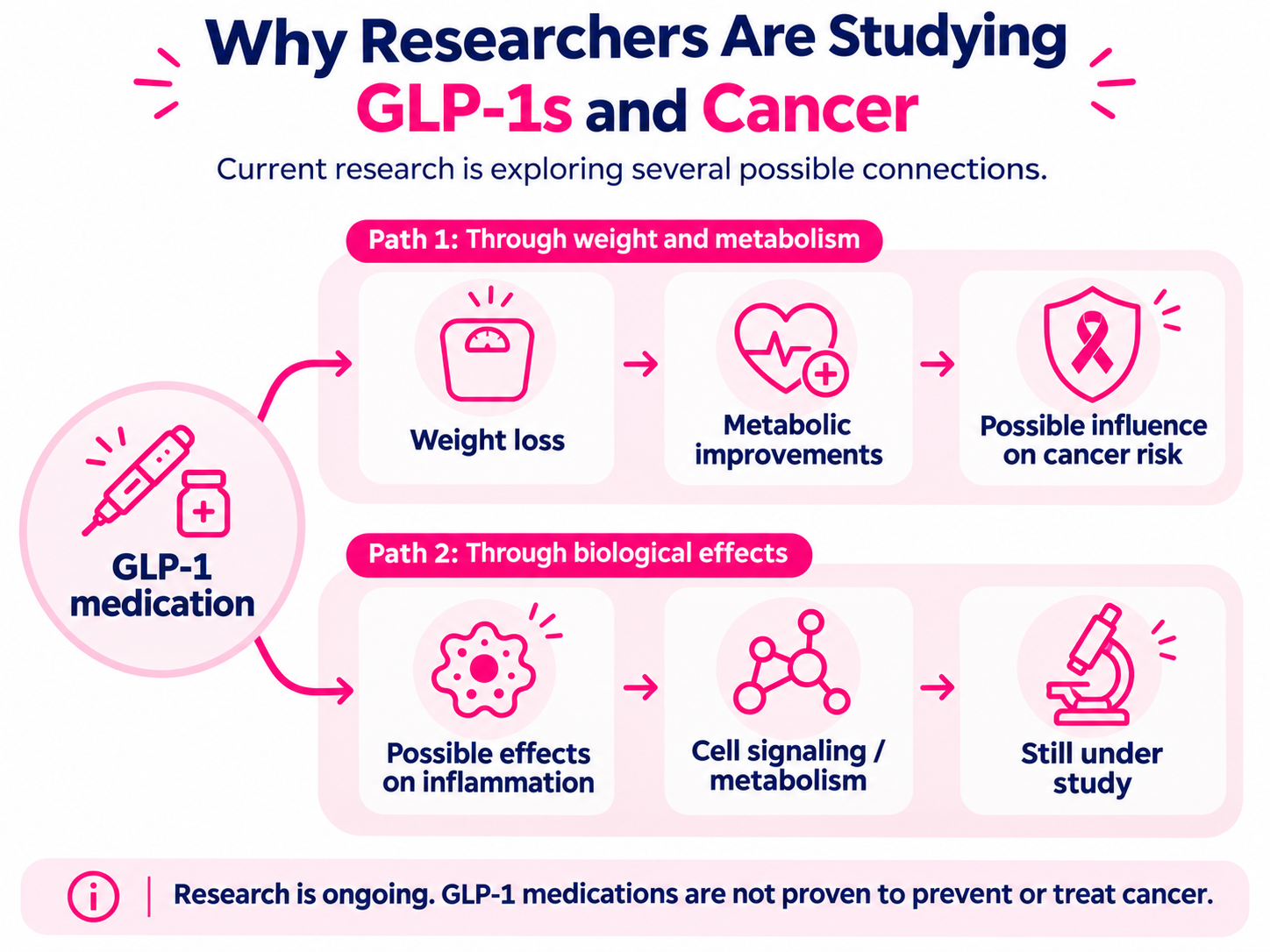
Because certain GLP-1 medications can lead to substantial weight loss and improvements in metabolic health, researchers are now studying two possible ways these medications could influence cancer risk.
Through Weight Loss and Better Metabolic Health
Maintaining a healthy weight is one of several factors associated with a lower risk of certain cancers. Since GLP-1 medications can help some people lose weight and improve blood sugar regulation, researchers want to know whether these changes might also affect long-term cancer risk.
There are reasons to investigate this possibility, but an important distinction remains: we do not yet know whether taking a GLP-1 medication itself lowers a person's cancer risk.
Some observational studies have reported lower rates of certain obesity-related cancers among people prescribed GLP-1 medications. Observational research can identify associations, but it cannot prove that the medication caused the difference.
Through Possible Effects Beyond Weight Loss
Scientists are also investigating whether GLP-1 medications could influence biological processes related to cancer in ways that are independent of weight loss.
Early research has explored possible effects on inflammation, immune signaling, cell growth, and the way cells use energy. Some laboratory and preclinical studies have produced intriguing findings, but this area of research is still developing.
At this point, there is not enough evidence to conclude that GLP-1 medications directly prevent cancer through these mechanisms. More research in humans is needed to understand whether these biological effects are clinically meaningful.
GLP-1 and Breast Cancer: What Have Studies Found?
Research on GLP-1 medications and breast cancer is still evolving, and recent studies have produced some interesting but not yet definitive results.
A 2026 Penn Medicine study examined health records from more than 111,000 women ages 45 to 80 with a BMI of 25 or higher. Researchers found that women with documented GLP-1 prescriptions had about 30% lower odds of developing breast cancer in a matched analysis compared with women without documented GLP-1 exposure.
That finding is encouraging, but it is important to understand what it does and does not show.
The study was observational, meaning researchers looked at patterns in existing health records rather than randomly assigning people to take a GLP-1 medication. As a result, the study cannot establish that GLP-1 medications caused the lower breast cancer incidence. Other differences between the groups may have contributed to the results.
The study also did not account for every factor that could influence breast cancer risk, including genetic risk, the specific GLP-1 medication used, duration of treatment, and cancer subtype.
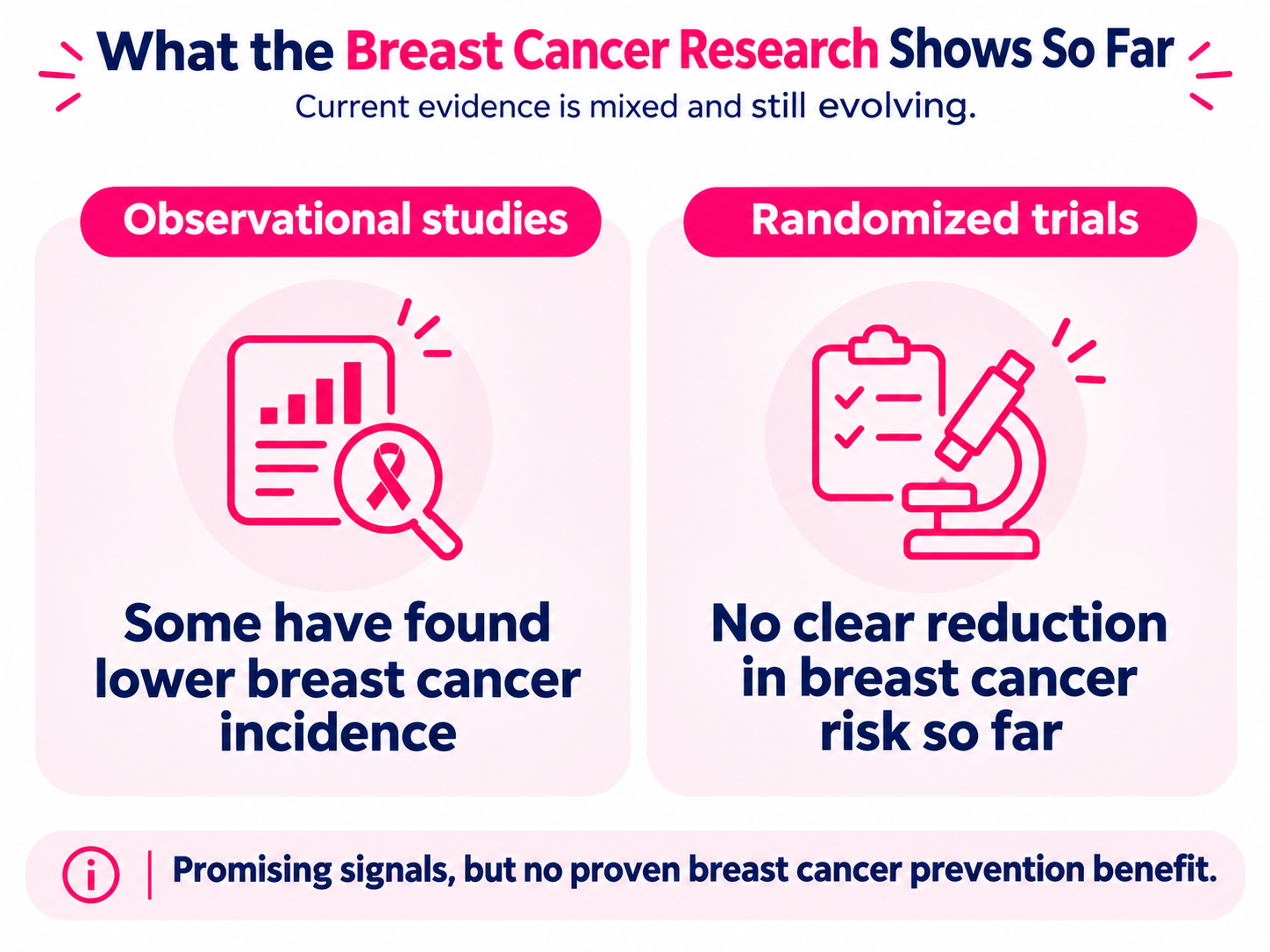
Randomized clinical trial data have been less suggestive of a protective effect. A recent systematic review of 48 randomized trials involving more than 94,000 participants found no clear difference in breast cancer risk between people receiving GLP-1–based therapies and those receiving placebo.
However, most of those trials were designed to study outcomes such as diabetes, weight loss, or cardiovascular health, not cancer. Follow-up periods were also relatively short compared with the amount of time many cancers take to develop.
The takeaway: Current research does not show that GLP-1 medications prevent breast cancer. Observational studies have raised an interesting possibility, but longer-term studies specifically designed to evaluate cancer outcomes are needed before researchers can draw firm conclusions.
What Are the Long-Term Effects of GLP-1 Medications?
GLP-1 receptor agonists have been studied extensively for conditions such as type 2 diabetes and obesity, but questions remain about some of their very long-term effects, particularly as newer medications are used by larger populations over longer periods.
Cancer is one of those areas where longer follow-up is especially important. Many cancers develop over years or decades, which makes it difficult for shorter clinical trials to determine whether a medication ultimately increases, decreases, or has no effect on cancer risk.
GLP-1 medications can also cause side effects. These vary by medication, dose, and individual, but may include:
- Gastrointestinal symptoms: Nausea, vomiting, diarrhea, constipation, and abdominal discomfort are among the most commonly reported side effects.
- Gallbladder problems: Some GLP-1 medications are associated with an increased risk of gallstones and gallbladder inflammation.
- Pancreatitis: Acute pancreatitis has been reported in people taking GLP-1 receptor agonists and is listed as a warning for some medications.
Gastrointestinal symptoms may improve for some people over time, particularly as the body adjusts to treatment, but severe gastrointestinal reactions can occur and should be discussed with a healthcare professional.
What About the Thyroid Cancer Warning?
For example, Wegovy® (semaglutide) has a boxed warning about the risk of thyroid C-cell tumors based on findings from animal studies. In rodents, semaglutide caused thyroid C-cell tumors. However, it is not known whether Wegovy causes these tumors, including medullary thyroid carcinoma, in humans.
Wegovy should not be used by people with a personal or family history of medullary thyroid carcinoma or by people with Multiple Endocrine Neoplasia syndrome type 2 (MEN 2).
This is one reason it is important to discuss your medical history, family history, medications, and individual risk factors with your healthcare provider before starting a GLP-1 medication.
What Can You Do for Your Health Now?
There is no single medication, food, supplement, or lifestyle habit that can guarantee cancer prevention. However, there are evidence-based steps you can take to help reduce your overall cancer risk.
The American Cancer Society estimates that at least 40% of newly diagnosed cancers in U.S. adults are potentially avoidable through changes related to factors such as tobacco exposure, excess body weight, alcohol use, diet, physical inactivity, and other modifiable risks.
- Move your body regularly: Make regular physical activity part of your routine. Moderate exercise for at least 30 minutes per day can increase the release of immune system cells. It can also improve your mood.
- Nourish with whole foods: Aim for a balanced diet that includes lots of colorful fruits, leafy vegetables, and healthy fats. While a healthy diet can't guarantee the prevention of breast cancer, making healthy food choices can help reduce your overall risk.
- Stay proactive with medical screenings: Make sure to discuss your personal and family history with your healthcare provider and follow their recommendations for an appropriate screening plan.
Remember to keep breast health a regular part of your wellness and prevention plan. Making healthy lifestyle changes remains an important cornerstone of cancer prevention and survivorship, regardless of whether you take a GLP-1 medication.
Why HerScan for Breast Cancer Screening?
Approximately 1 in 8 women will develop breast cancer in their lifetime. Breast cancer is common, which makes understanding your individual risk and following an appropriate screening plan especially important.
HerScan provides breast ultrasound screening designed to make additional breast imaging more accessible and convenient.
Breast ultrasound uses sound waves to create images of breast tissue and does not use radiation. It may be used as an additional screening tool for some women, including those with dense breast tissue, depending on their individual risk factors and healthcare provider's recommendations.
It is important to understand that breast ultrasound does not replace mammography and is not used by HerScan to diagnose breast cancer. Women should continue following the breast screening recommendations provided by their healthcare professionals.
A HerScan appointment takes approximately 20 minutes. Images are obtained by an ARDMS-registered sonographer and reviewed by a Board-Certified Radiologist, with results provided through a secure portal.