Important: This article is not a substitute for personalized medical advice or care from a licensed healthcare provider. It’s intended for general educational information only. It should not be used as a source for medical decision-making. If you are concerned about a breast lump, speak with your healthcare provider.
Discovering that you have a breast lump can be alarming. It’s natural to jump right to the worst-case scenario. Fortunately, it’s good to know that most breast lumps are not cancerous. Research has found that only 3% to 6% of breast lumps are cancerous (malignant). Often, breast lumps are caused by harmless conditions such as hormonal changes, fibroadenomas, or breast cysts.

Although a breast lump doesn’t necessarily mean cancer, it shouldn’t be ignored. You can’t determine the cause of a lump based solely on how it feels or looks. Any unusual change in your breasts should be evaluated by a healthcare professional as soon as possible.
Your doctor can perform a clinical exam and recommend the appropriate imaging tests to determine the next steps.
Types of Breast Lumps
It's important to know that not all lumps are the same. Breast lumps can differ in size, texture, and cause. Some develop as a result of normal hormonal changes and may come and go throughout your menstrual cycle, while others remain unchanged or require further evaluation. Understanding the different types of breast lumps can help you feel more informed.
Benign
The most common benign or noncancerous breast lumps include:
- Breast cysts: These are fluid-filled sacs that can vary in size. They may change based on hormonal fluctuations.
- Fibroadenomas: Most common in younger women, particularly those in their teens through 30s. These lumps have defined borders and are easy to move beneath the skin. They are oval or round.
- Lipomas: A lipoma is a soft, painless, noncancerous lump made up of fatty tissue.
Malignant or Cancerous
Not all malignant breast lumps are the same, but they may share certain characteristics, such as:
- Hard to the touch or dense.
- Harder to move beneath the skin.
- Shaped unevenly with uneven edges.
- Painless, although some cancerous lumps can cause pain.
These features are not definitive. Some breast cancers may feel soft, mobile, or painful. It’s also important to pay attention to nipple inversion, redness, and changes in the skin, such as dimpling or thickening.
How Are Breast Lumps Diagnosed and Treated?
The diagnostic process for both cancerous and non-cancerous breast lumps begins with a clinical exam and a workup. This may include imaging such as a diagnostic mammogram, breast ultrasound, or both, depending on your age, symptoms, and clinical history. If imaging findings indicate that additional evaluation is needed, your healthcare provider may order a biopsy of the lump. A small sample of tissue is removed and examined under a microscope. This is a definitive way to confirm whether a lump is cancerous.
Once you have a diagnosis, treatment depends on several factors, including the cause. Simple noncancerous cysts and small fibroadenomas may not require treatment at all. Sometimes, surgical removal or draining is required if the breast lump is painful or bothersome.
Treatment for cancerous lumps depends on the stage, type, and other factors. It also depends on your overall health and medical history.
What Does a Breast Lump Feel Like?
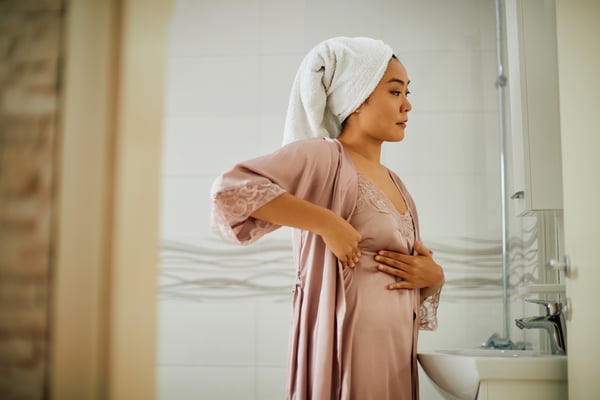
Every woman's breasts feel different. Because of that, the best way to notice changes is to know what is normal for you. Breast self-awareness and regular self-checks can help you become familiar with what is normal for your body. Not sure how to do one? Check out our full guide on how to perform a breast self-exam.
The best time to do a breast self-exam is a few days after your period ends (if you still have periods). This is when your breasts are least likely to be tender or swollen. If you don’t have periods any longer, schedule a self-exam in your calendar on the same day each month.
Lumps aren’t the only breast changes associated with cancer. Keep an eye out for the following signs of breast cancer:
- New nipple inversion
- Persistent pain or tenderness
- Skin dimpling or puckering
- Nipple discharge (may be bloody)
- Redness, warmth, or tissue dimpling
- A lump or swelling in the underarm
Is Breast Pain Normal with a Lump?
Some breast lumps can be painful. Hormonal breast changes and cysts can cause tender and painful lumps. Some types of breast cancer can also cause pain. Pain alone should not be your guide as to whether a lump is benign or cancerous. Any persistent breast pain should be evaluated by a healthcare provider.
Causes of Breast Lumps
Breast lumps can occur for all kinds of reasons. Here are some common causes of noncancerous lumps:
- Hormonal changes: Hormonal changes are especially common during the menstrual cycle, pregnancy, and perimenopause.
- Age-related changes: Breasts naturally change with age. It’s common to notice new lumps or other changes during perimenopause and menopause especially.
- Fibrocystic breast changes: This benign condition is common and usually related to hormonal changes. It can cause the breasts to feel lumpy.
- Bacterial infection (mastitis): Mastitis is an infection that is most often triggered by breastfeeding. Besides causing flu-like symptoms, mastitis can cause a swollen, tender lump in the breast.
- Breast injury: Injury or trauma to the breast can cause fat necrosis. Damaged fatty tissue forms a round, firm lump as it heals.
Suspicious breast lumps, including those that feel irregular, hard, or fixed in place, should always be evaluated by a healthcare provider to rule out breast cancer.
Some lumps need no treatment at all. Other lumps may require monitoring, medication, or a surgical procedure. The only way to know what treatment you need is with a proper evaluation.
Do Benign Breast Lumps Increase Breast Cancer Risk?
It depends on the lump. Simple cysts generally do not increase breast cancer risk. But some conditions involve "proliferative" or abnormal cell growth. These can raise your risk of developing breast cancer in the future.
Little or no increased risk. These common conditions raise cancer risk very little (or not at all):
- Fibroadenomas: Simple fibroadenomas generally do not increase risk, while complex fibroadenomas may be associated with a slight increase.
- Simple cysts
- Mastitis
- Fat necrosis
Slight increase in risk (up to 2x higher). These involve some extra cell growth, but look normal under the microscope:
- Sclerosing adenosis
- Ductal hyperplasia (usual type)
- Proliferative breast disease without atypia
Moderate increase in risk (up to 5x higher). These are considered "atypical.” The cells look abnormal and increase the risk of breast cancer significantly.
- Atypical lobular hyperplasia (ALH)
- Atypical ductal hyperplasia (ADH)
If a biopsy reveals one of the above conditions, it doesn't mean that they will develop into cancer. However, your provider may recommend more frequent monitoring or other interventions to reduce your risk.
What to Do If You Feel a Breast Lump
You were performing a breast self-exam and found something that feels like a lump. So, what happens next? Healthcare providers often use what's known as a triple assessment. This is a three-part approach that combines a physical exam, imaging, and, if needed, a biopsy to determine whether the lump requires further treatment.
The type of imaging needed typically depends on your age and other factors, such as whether you are breastfeeding.
- If you're under 30, pregnant, or breastfeeding, an ultrasound may be the first and sometimes only test needed.
- If you're over 30 and not breastfeeding or pregnant, your provider may recommend both a mammogram and an ultrasound to get a more complete picture.
How to Maintain Good Breast Health
Here are some ways to maintain good breast health.
1. Practice Monthly Self-Exams
Practicing regular self-exams can help you become more familiar with how your breasts normally look and feel. So, you can spot changes early. The best time is a few days after your period ends, when breasts are less tender and swollen. Look for any nipple changes, new lumps, or changes in texture, size, or shape.
2. Stay Up to Date With Routine Screenings
Routine screenings, based on your personal risk factors, are important.
Risk factors include things like age, breast tissue density, and a history of breast cancer in your family. Women with dense breast tissue may benefit from discussing additional screening options, such as breast ultrasound screening, with their healthcare provider. Certain genetic mutations (BRCA1/BRCA2) can also increase your risk.
Most organizations recommend routine mammography beginning at age 40 for women at average risk, although recommendations vary slightly among medical organizations. If you have higher risk factors, talk to your healthcare provider about starting screening earlier or additional screening methods like ultrasound.
3. Talk to Your Healthcare Provider About Changes
While it’s true that not every lump or change means cancer, you should talk to your healthcare provider about any new lumps, nipple discharge, skin dimpling, or persistent pain. Early evaluation is important for better outcomes.
Why HerScan for Breast Cancer Screening?
Our screenings are performed by experienced, certified sonographers who have extensive training in breast imaging. Screenings are comfortable and simple at HerScan. Results are reviewed by Board-Certified Radiologists and sent directly to you.
Take a proactive approach to your breast health. Learn more about HerScan breast ultrasound screening.