
Note: Information contained in this blog post should not be used as medical advice or for diagnosis. Consult with your doctor if you are experiencing symptoms before making any medical decisions.
Inflammatory breast cancer (IBC) is a term most people never hear from their doctors or in popular media. While considered rare, this aggressive form of breast cancer still accounts for 1% to 5% of all breast cancer cases. IBC is notoriously difficult to screen for early; unlike other types of cancer, there is often no tumor or lump present. More importantly, the disease can progress in a matter of weeks or months instead of years once symptoms start.
Another reason it’s important to know about specific inflammatory breast cancer symptoms:. It's easy to mistake IBC for a common infection. That means diagnosis and treatment are often delayed. Early detection means everything for survival rates.
What Is Inflammatory Breast Cancer (IBC)?
IBC spreads faster than more common breast cancers. It also presents differently. For most IBC patients, there's never a telltale lump. The "inflammatory" nature of IBC affects the breast skin and lymph vessels. It's common to mistake IBC for mastitis or cellulitis.
Generally, IBC patients experience rapid swelling, redness, skin changes, and warm sensations in the breast(s). Skin may even turn purple or develop ridges and dimples similar to an orange peel. This is where many women with undetected IBC assume there's a clogged milk duct or skin infection. However, what's really behind the changes is the growth of cancer cells blocking lymph vessels. This is what often delays a proper diagnosis.
IBC symptoms generally develop in a matter of weeks to months. Due to this cancer's rapid progression, immediate attention is needed.
Key Inflammatory Breast Cancer Symptoms to Watch For
There is no “gold standard” test specifically for IBC screening since there is typically no lump present. A combination of diagnostic screening modalities is usually recommended, such as breast ultrasound, MRI and mammography. A biopsy may also be recommended depending on these findings.
IBC symptoms have rapid onset. Progression can also happen between appointments, also known as interval breast cancer. Even properly performed breast self-exams often don't detect IBC.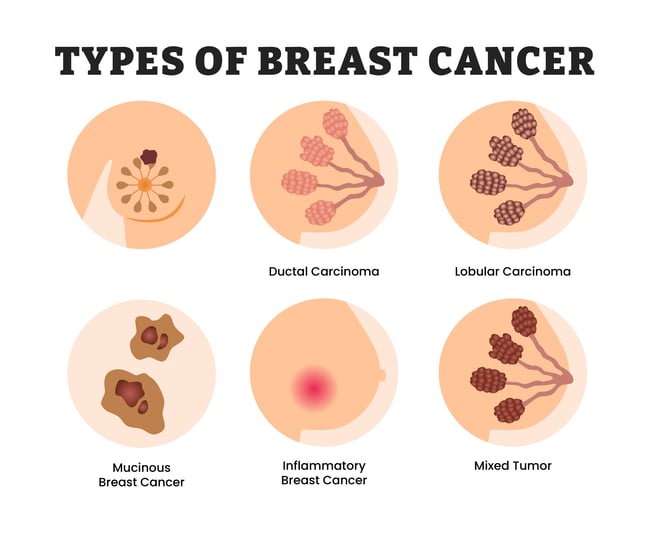 The breasts may become red and warm to the touch. Initial symptoms can quickly lead to breast swelling and tenderness. Knowing IBC signs can lead to immediate intervention. For most women, symptoms include:
- Nipple inversion that causes the nipple to point inward or lie flat against the breast.
- Swelling or enlargement of the breast.
- Redness (including pink or purple discoloration) covering more than one-third of the breast.
- Changes in skin texture that make skin rougher, more dimpled, or similar to the texture of an orange peel.
- One-sided breast swelling.
- Unexpected breast heaviness.
- Bruising and discoloration.
- Persistent breast itching that might feel like an allergic reaction to fabrics or personal products.
What makes IBC particularly challenging is that its presentation can mimic a dermatologic or infectious process rather than a primary breast malignancy. Symptoms are frequently mistaken for cellulitis, mastitis, allergic reactions, or benign age-related breast changes, which is why prompt clinical evaluation is essential.
Early Breast Cancer Signs vs. IBC Symptoms
Women who have traditionally been counseled to monitor for palpable breast lumps may be less familiar with the clinical presentation of inflammatory breast cancer. Recognizing the distinction between more common breast cancer signs and the symptoms associated with IBC is important. Typical early breast cancer findings that many women are accustomed to monitoring for include:
- A distinct lump in the breast or armpit.
- A change in breast size or shape.
- Nipple discharge.
- Changes to the nipple.
There's one thing to remember. IBC symptoms generally occupy most of the breast instead of being concentrated in a lump.
Who Is at Risk for Inflammatory Breast Cancer?
IBC can affect anyone. However, certain groups have elevated risk factors. It's important to tell your care provider if you fall into a higher-risk category. Inflammatory breast cancer risk factors include:
- Younger Age: On average, IBC is diagnosed about five years younger than non-IBC.
- Genetics: While not exclusively associated with IBC, BRCA1 and BRCA2 mutations elevate IBC risks.
- Family history: IBC odds are higher if a parent, sibling, or child has had the disease.
- Early menstruation: Menstruating before age 12 is linked with higher risk of developing breast cancer.
- Pregnancy history: Women who have no full-term pregnancies or their first pregnancy after age 30 have elevated risk.
- Health history: A previous breast cancer diagnosis increases the risk of recurrence or a new diagnosis.
- Obesity: High body weight in both premenopausal and postmenopausal women is a significant risk factor.
Women with heightened IBC risk should engage in regular screenings and be watchful for any unusual breast changes.
Diagnosing Inflammatory Breast Cancer
IBC is most commonly found in women between the ages of 30 to 50. IBC detection on mammograms is challenging because it spreads throughout the skin. Dense breast tissue can make detection even more challenging. Its atypical presentation, compared with more common breast cancer symptoms, can also make diagnosis more complicated.
For these reasons, a detailed exam with diagnostic tools is necessary. The roster needed for proper diagnosis typically includes:
- Mammogram: This test captures detailed images of breast tissue.
- Ultrasound: When imaging is unclear or breast tissue is dense, ultrasound provides visual clarity on breast structure. Ultrasound often identifies findings missed by mammograms that distinguish inflammatory cancer from infections.
- MRI: This in-depth imaging allows practitioners to evaluate internal spread.
- Biopsy: By taking a tissue sample, practitioners can confirm the presence of cancer in the breast.
Why HerScan for Breast Cancer Screening?
Symptoms of inflammatory breast cancer aren’t always obvious. When clarity is important, combining ultrasound with mammography to increase breast cancer detection by up to 96% matters. HerScan offers accessible and affordable appointments with a certified sonographer specializing in breast imaging near you. Plus, scans are reviewed by board-certified radiologists specializing in breast imaging. Appointments take 20 minutes in most cases. There's no radiation used with HerScan breast cancer screenings. Schedule your noninvasive, private breast ultrasound exam now.