Many factors influence whether someone develops breast cancer. One of them is breast tissue density. Heterogenously dense breasts contain a high amount of fibrous connective and glandular tissue that is mixed with some fatty tissue.
Dense breasts are common. About 40% of women fall into the heterogeneously dense category (Category C), and about 10% fall into the extremely dense category (Category D).
Learn about the connection between breast density and cancer, and some steps you can take to take charge of your breast health.
Does Dense Breast Tissue Turn Into Cancer?
Dense breast tissue does not "turn into" cancer. However, it can impact breast health in two important ways:
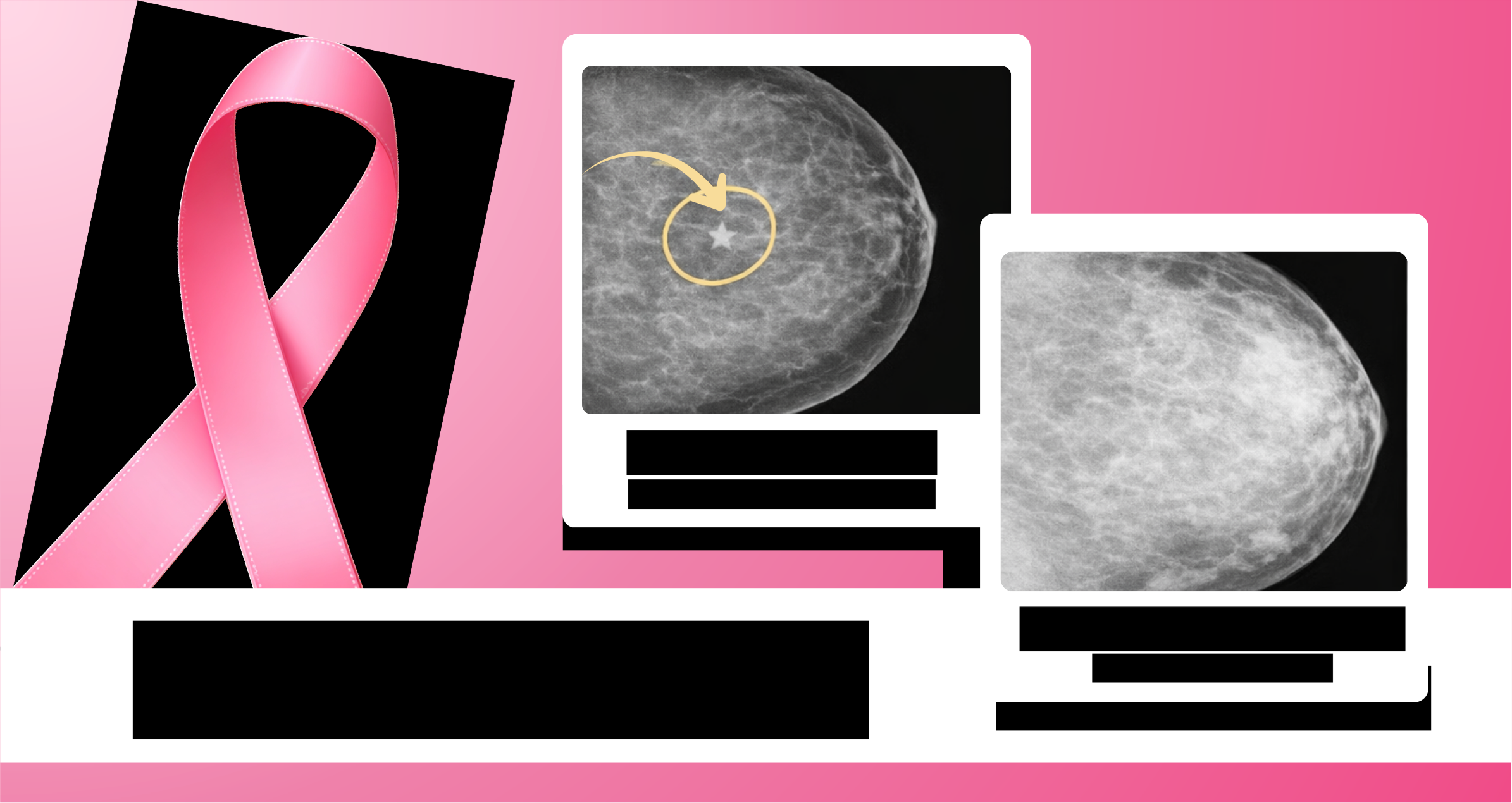
1. It can mask cancer on mammograms: Dense tissue and tumors can look similar on a mammogram.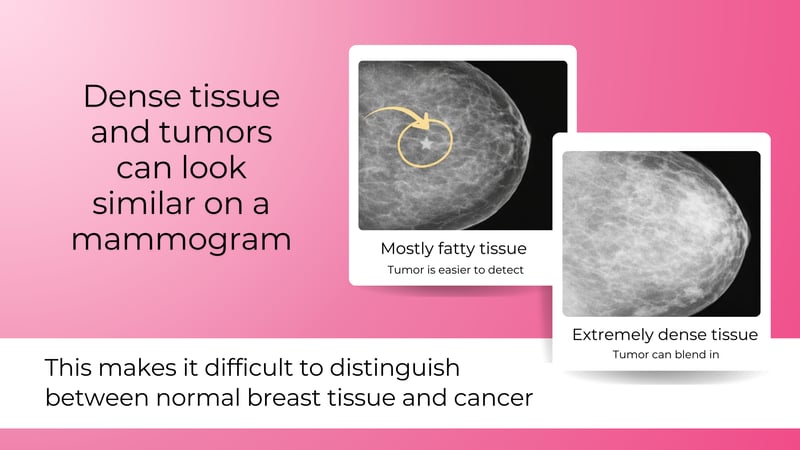
What Does Your Breast Density Level Mean?
There are four levels of breast density that doctors are required to report.
- Category A - The breast is made up of almost all fatty tissue (about 10% of women).
- Category B - There are scattered areas of dense glandular and fibrous tissue (about 40% of women).
- Category C - More of the breast is composed of dense glandular and fibrous tissue, also described as heterogeneously dense (about 40% of women).
- Category D - The breast is extremely dense, making it much more difficult to see masses on a mammogram (about 10% of women).
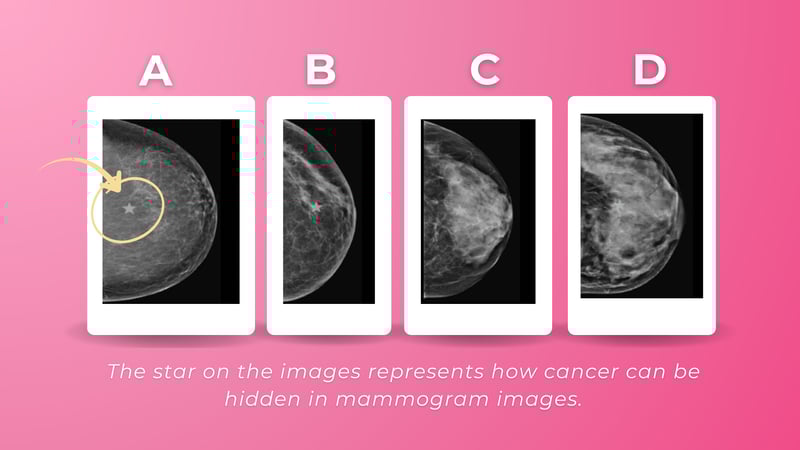
Patients whose breast density falls into categories C and D are considered to have dense breast tissue.
How Do You Know if You Have Dense Breast Tissue?
You can’t tell breast density by touch or appearance—dense breasts don’t necessarily feel different from non-dense breasts. You can only know if you have dense breasts through a mammogram.
It is recommended that women who are at average risk of breast cancer should begin receiving annual mammograms starting at age 40. Since 2024, the Food and Drug Administration has mandated that doctors tell women whether they have dense breasts. Mammogram reports should describe breasts as either "dense" or "not dense."
How Common Is Heterogeneously Dense Tissue?
Heterogenously dense breast tissue is very common. It occurs in approximately 40% of women. Several factors contribute to the development of dense breast tissue. These include:
- Genetics - Breast density is often inherited. If your mother has dense breasts, then you are more likely to have them too.
- Age - Younger women (in their 20s and 30s) naturally have denser breast tissue. As you age (or go through menopause), glandular tissue is often replaced by fat, making the breast tissue less dense.
- Hormone levels - Premenopausal women are more likely to have dense breasts due to higher estrogen and progesterone levels. Pregnancy and breastfeeding can lead to hormonal shifts, which can temporarily increase breast density. Hormone replacement therapy can also increase breast density or prevent it from decreasing as you get older.
- Lower body weight - Women who have a lower BMI or less body fat tend to have less fatty tissue in their breasts. This results in a higher proportion of dense tissue.
If a mammogram shows that you have dense breast tissue, your doctor may conduct a breast cancer risk assessment. This tool can predict your risk of developing breast cancer during your lifetime. It can also help you determine if you could benefit from additional cancer screenings.
Additional Breast Screenings for Dense Breast Tissue
Mammography is an important screening tool for breast cancer detection. However, research shows that incorporating ultrasound for breast cancer screening with mammography can increase detection rates by up to 96% particularly in women with dense breast tissue. Breast ultrasounds use sound waves rather than radiation to distinguish between fluid-filled cysts and solid masses.
On a mammogram, both dense tissue and tumors appear white. This makes it difficult to distinguish between normal breast tissue and cancer.
There are two common ultrasound approaches:
- Handheld ultrasound: Typically performed by a trained technologist/clinician, often to evaluate a specific area of concern.
- Automated breast ultrasound (ABUS): Uses a larger transducer to scan more of the breast in a standardized way.
Supplemental breast cancer screenings through ultrasounds may be recommended for women at a higher risk of cancer or those with dense breast tissue. They can help provide you with a clearer picture of your breast health and pick up on potential cancers that would otherwise go unseen in a mammogram.
Click here to learn more about HerScan's dense breast tissue ultrasound.
Why HerScan for Breast Cancer Screening?
When used alongside mammography, breast ultrasounds can sharply increase cancer detection in women with dense breast tissue. Early detection is key in the fight against breast cancer. When caught early, the breast cancer survival rate is 99% according to the American Cancer Society.
HerScan provides women with accessible and preventive breast ultrasound screenings. Our certified sonographers offer quick appointments and convenient scheduling for ultrasound screenings that empower you to take charge of your breast health.
The information you receive can help you determine the next best steps for your medical care and treatment. Have questions? Learn more about the ultrasound process at our FAQ page.